
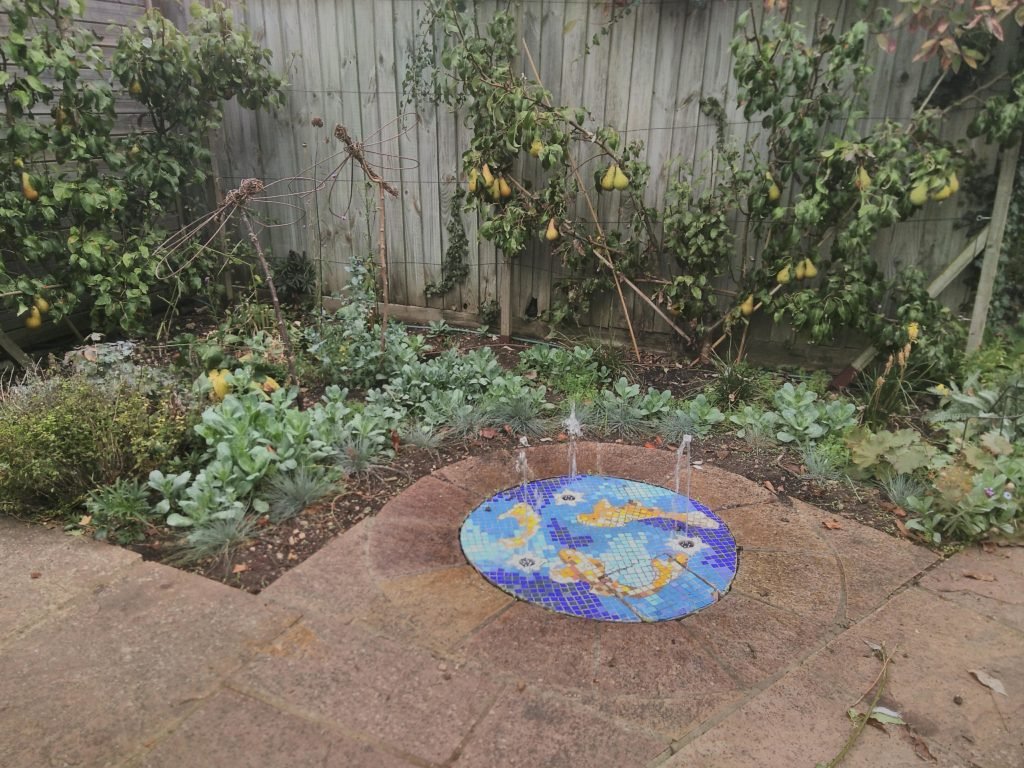
We are happily eating our way through this year’s fourth harvest of pears. They are absolutely divine. Our juicy, sweet and perfumed Glou Morceau have come from two minarette shaped trees, each barely higher than two meter with a footprint of around two square feet.
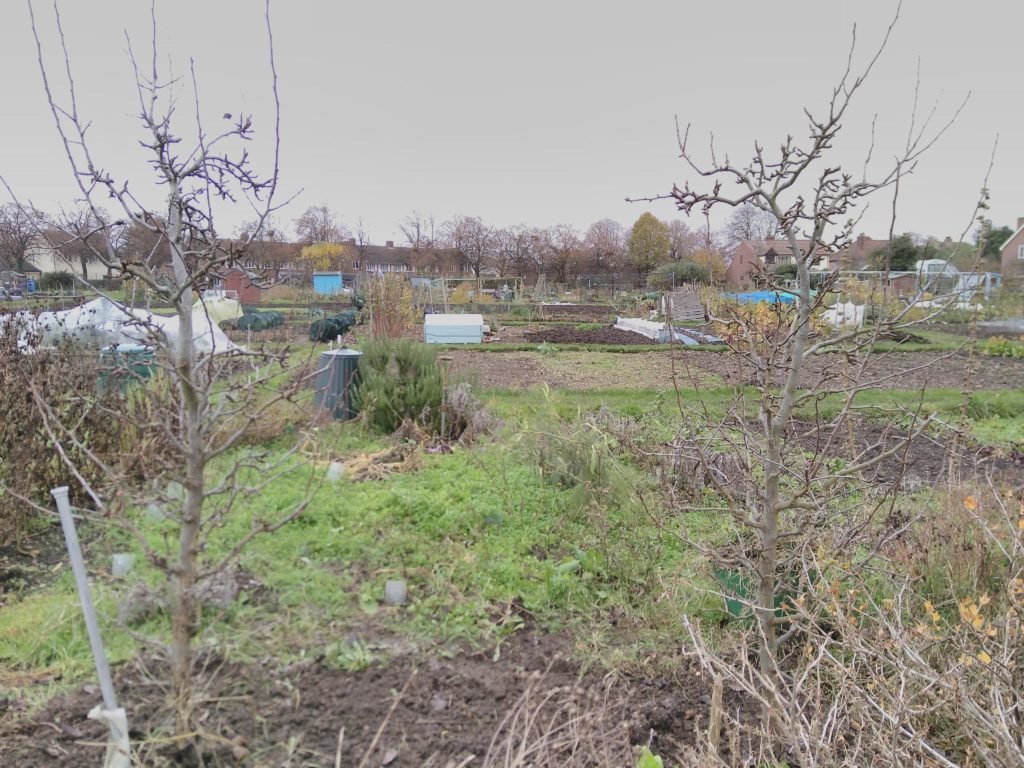
A few years ago we moved the trees from our garden to the allotment. It was a good decision as Glou Morceau requires full sun, even more so than other pear trees. Apples can put up with quite a bit of shade, but pears not. Glou Morceau couldn’t even deal with the mostly sunny, but a tiny bit of shade in our back garden. Williams Bon Chretien on the other hand happily grows in a similar spot and produces a good crop each year.
Although not all our pear trees are productive yet, we have had a steady and successive supply of ripe pears from mid-September till now. Our harvest started with Williams Bon Chretien, followed by Conference and Beure Hardy and now Glou Morceau, which were only harvested early November. All are small trees. Our two conference trees are trained as fans against the fence and have given us a full crate for the third year in a row.
Pears are harvested when still hard and they will ripen off the tree (whereas on the tree they will simply rot). You can check if a pear needs to be picked when you cup it in your hand and it comes off the tree easily with a bit of stalk. Another method is to see if the pips are black. Once picked you then need to leave them for a week or two/three until they are ripe, checking up on them regularly. Unlike apples it is difficult to keep pears for long periods (unless you have a commercial fridge!) and they all ripen around the same time.
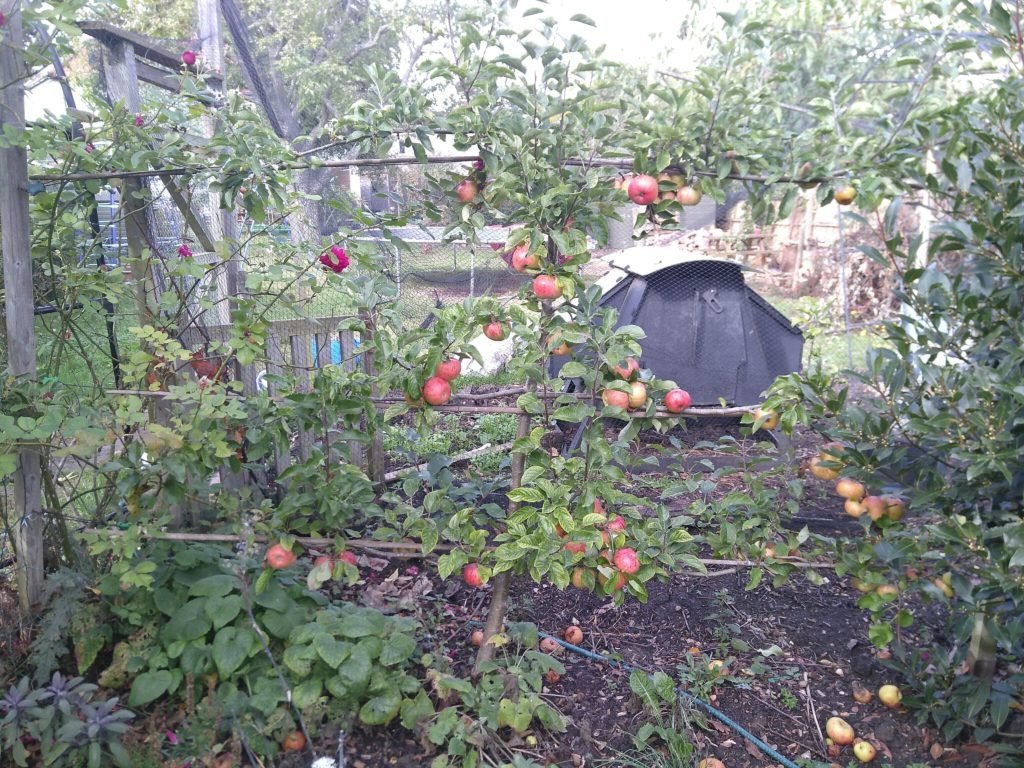
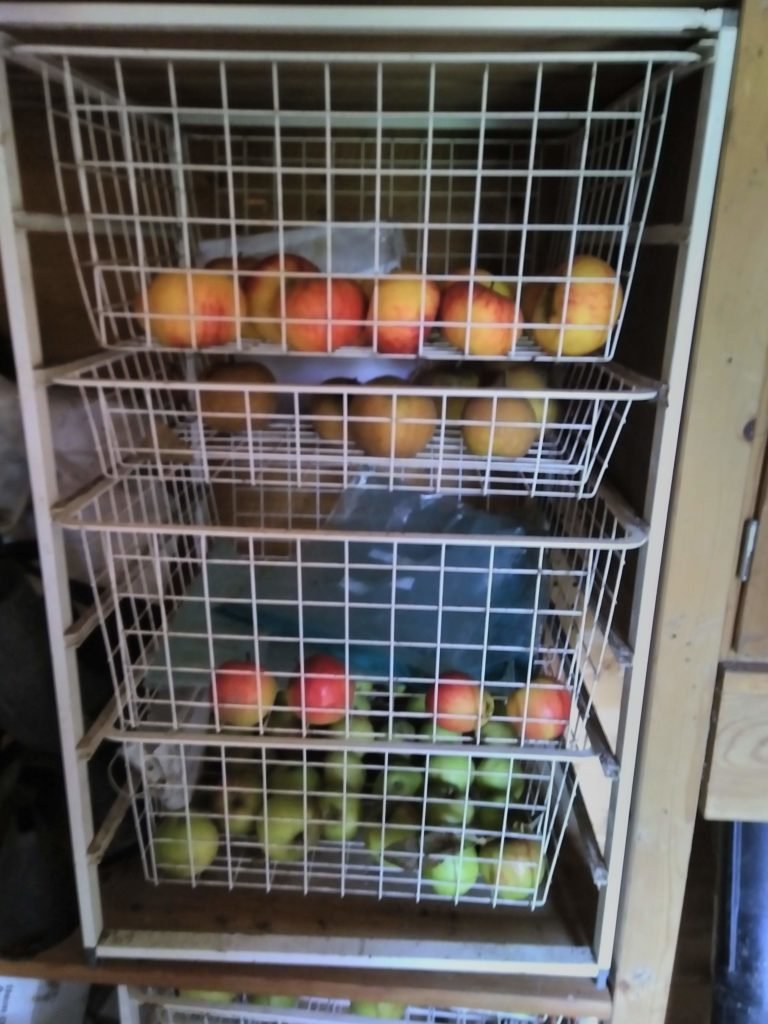
Our apple harvest started a few weeks before we ate the first pear. Since early September we’re eating our own apples. There are still apples in storage. The harvest wasn’t great and especially the late trees didn’t produce much, so we expect to eat our last apple in January. Late apple varieties are by definition keepers and can be eaten up to March or April. For example D’Arcy Spice is a variety that is really nice to eat in March. The best way of storing it is in a plastic bag in a shed. Other varieties can just be kept in a tray or crate in the shed.
The earliest varieties on the other hand cannot be kept for any period at all and are ready to eat when picked. Late varieties, even if desert varieties, are quite tart when picked and they need to be stored at least a few weeks before they can be eaten. Off the tree they convert starch to sugar, gradually becoming sweeter the longer they’re stored. Even the most sour apples become quite nice when stored for a few months.
If you have an apple tree in your garden and do not know the variety, it is worth going to an apple day or asking an expert to identify it. The East of England Apple & Orchard Project or one of its sister organisations may be able to help. You’ll then have a better indication of when to harvest it and how and if you can store it.
A lot of apples are wasted each year because the owners do not know at what time of year to pick them and if they need to be stored before they are nice to eat. Thus the apples are dismissed as being too sour to eat and thrown in the bin, whereas it may be a variety that will last four or five months stored in a shed, becoming sweeter each month.
Regardless if you prefer apples or pears, both are available on a range of rootstocks which means that you can buy trees that will remain small and can be trained in various forms such as minarettes, espaliers, step-overs or fans, or trained up an arch, taking up little space and suitable for even the smallests of gardens. Growing more than one (small) tree not only gives you a succession of fruit, it also allows you to ensure that your fruit trees have suitable pollinating trees nearby.
Summary
- Pears need (full) sun. Apples can be grown in (a bit of) shade
- All pears ripen a few weeks after being picked. Early apples are to be eaten shortly after harvesting. Late(r) apples need to be stored before being ready to eat and often can be stored for months in a garden shed.
- By planting successive varieties, you can eat your home grown pears from late August till early December. Successive varieties of apples can give you home grown apples from late August till March or April.
- Both apples and pears can be grafted on small rootstocks, thus making it possible for small gardens to have a number of small trees, giving successional harvests and ensuring that trees have suitable pollinators.